
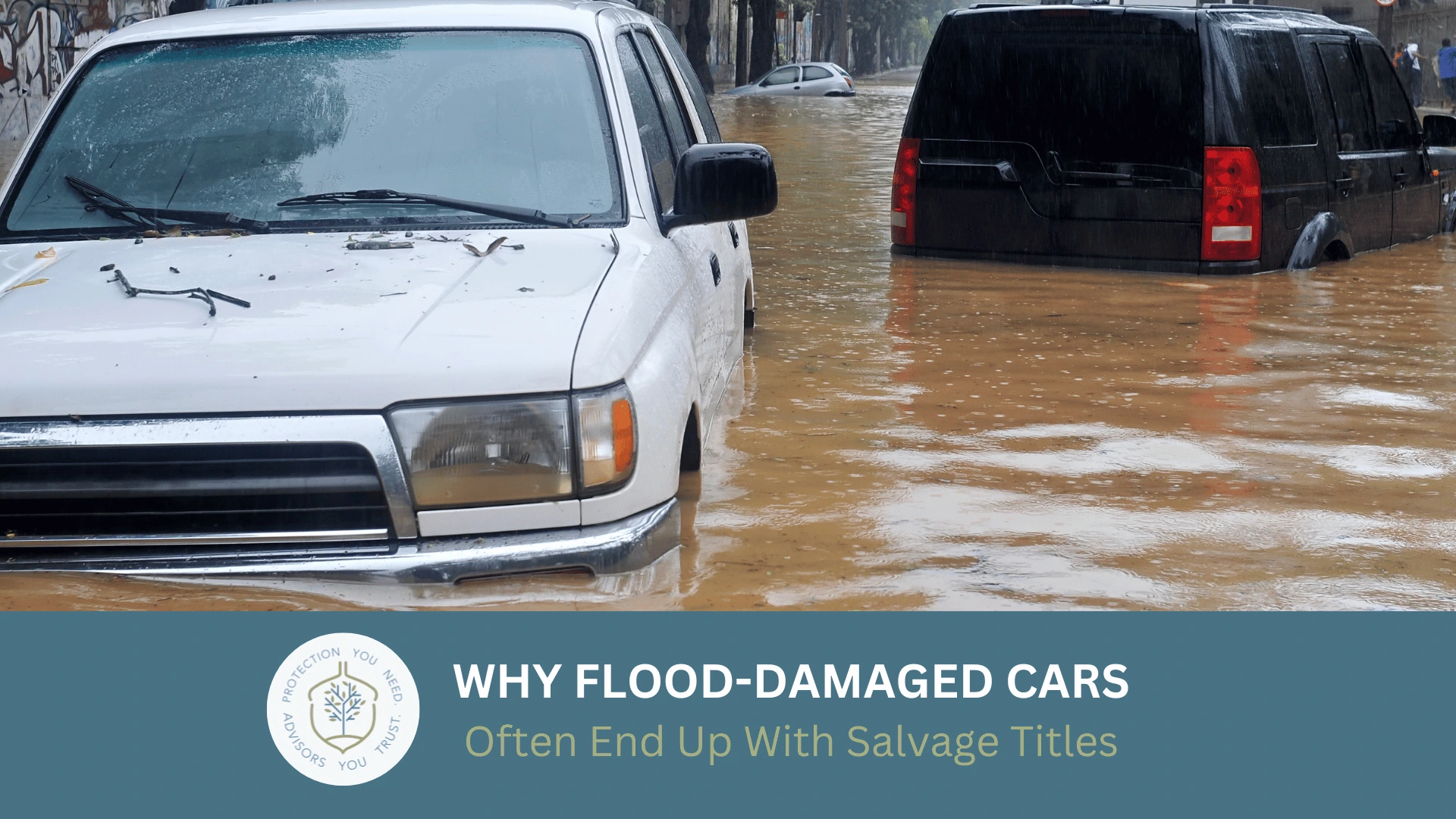
Flood-damaged cars carry risks that aren’t always visible at first glance. After severe storms or rising water levels, thousands of vehicles are exposed to moisture that seeps into engines, electrical systems, upholstery, and structural components.
Even when a car looks clean and fully restored, hidden corrosion and long-term mechanical issues can surface months later.
Because of these potential safety and reliability concerns, insurance companies frequently declare flood-affected vehicles a total loss.
Once that happens, the vehicle is typically issued a salvage title, signaling that it sustained significant damage in the past.
Understanding why flood-damaged cars often receive salvage titles can help buyers, sellers, and vehicle owners make informed decisions and avoid costly surprises.
Understand What Flood Damage Does to a Vehicle
It is easy to assume flood damage is mostly cosmetic. In reality, the impact often extends far beyond what is visible on the surface.
Water Reaches the Systems That Keep a Car Running
Once water enters a vehicle, it does not remain confined to the interior. It can spread into the engine, transmission, and other essential systems.
Engines are not designed to take in water. Even a short period of submersion can allow water into the cylinders.
If the engine is started while water is present, the result can be what mechanics call a hydrolocked engine.
Pistons cannot compress water the way they compress air and fuel, which can lead to bent components, internal damage, or a seized engine.
The transmission faces similar risks. Hydraulic fluid that allows smooth shifting can become contaminated.
As water mixes with fluid, seals may weaken and internal parts can begin to corrode. Over time, this may lead to slipping, rough shifting, or total transmission failure.
Electrical Systems Often Experience Lasting Damage
Modern vehicles rely heavily on electronics. Sensors, control modules, wiring harnesses, and onboard computers are located throughout the vehicle.
Floodwater, especially saltwater or water carrying debris, can corrode electrical connections and circuit boards.
One of the most challenging aspects of flood damage is that electrical problems do not always appear immediately. A vehicle may seem to operate normally at first.
Weeks later, warning lights, random error codes, loss of power, or unpredictable behavior may begin to surface.
As corrosion spreads through connectors and wiring, issues can develop gradually, making diagnosis and repair more complex.
The Interior is Rarely Fully Salvageable
Flood damage does not stop at mechanical systems. Inside the cabin, upholstery, carpeting, foam padding, and the insulation lining the doors and roof panels absorb water quickly. These materials hold moisture deep within their fibers, much like a sponge.
Even with aggressive drying, moisture often lingers in areas that are difficult to access. Over time, that trapped moisture creates conditions for mold and mildew to grow.
This can lead to health concerns and persistent odors that are difficult to remove completely.
Replacing the entire interior can be expensive, and even a full replacement does not guarantee that mold spores are not hidden within the vehicle’s structural cavities.
Corrosion That Develops Later is Often the Greater Concern
Beyond the visible damage, floodwater leaves behind contaminants. Silt, chemicals, fertilizers, oil, and debris settle into seams, joints, and metal surfaces as the water recedes.
As these residues remain inside the vehicle, corrosion can begin to form beneath the surface. A car that appears structurally sound shortly after a flood may experience gradual weakening of load-bearing components in the months that follow.
This type of damage often does not appear during a basic visual inspection and may require partial disassembly to identify fully.
Why Insurance Companies Often Declare Flood Vehicles Total Losses
When an insurer evaluates a flood-damaged vehicle, the decision centers on cost.
The adjuster compares the estimated repair expenses to the vehicle’s actual cash value before the flood. If repairs approach or exceed that value, declaring a total loss becomes likely.
Repair Costs Increase Quickly
Flood damage rarely affects just one component. A seized engine may need replacement. A contaminated transmission may require a rebuild.
Electrical systems often need extensive rewiring. Interior materials may have to be removed and replaced, and mold treatment can add further expense. Structural components may also require inspection and repair.
Individually, each of these repairs can be costly. Combined, they often push the total estimate beyond 75 to 100 percent of the vehicle’s pre-flood market value. At that threshold, many insurance policies trigger a total loss declaration.
Compromised Systems Create Safety Concerns
Cost is only part of the evaluation. Insurers also assess risk. Flood damage can affect brake lines, structural components, and electrical systems in ways that are not immediately visible.
Corrosion inside a frame or intermittent electrical failures can create safety concerns that are difficult to fully measure during an initial inspection.
Even if a repair estimate appears reasonable, there is no guarantee that every affected system has been identified and restored.
Restoring Long-Term Reliability is Challenging
Repairing a flood-damaged vehicle does not always restore it to its prior condition. Corrosion can continue even after visible damage has been addressed. Electrical issues may surface months after repairs are completed.
Performance and reliability may not return to pre-flood levels. Insurance companies factor this uncertainty into their assessments.
In many cases, the potential for ongoing problems weighs in favor of declaring the vehicle a total loss rather than approving extensive repairs.
Know What a Salvage Title Means for a Vehicle’s Future
In Louisiana, once a vehicle receives a salvage title, its legal status changes. It cannot be driven on public roads until it has been repaired, inspected, and reissued a rebuilt title through the state’s required process.
This inspection is intended to verify that the vehicle meets safety standards before it can return to regular use.
Even after being rebuilt, the vehicle’s history remains part of its record. In Louisiana, rebuilt-title vehicles typically carry lower resale values compared to similar vehicles with clean titles.
Insurance coverage may be more limited, and some carriers may restrict or decline full coverage options.
Selling a rebuilt vehicle can also take longer, as buyers often approach these purchases cautiously and lenders may be reluctant to finance them.
If you are considering purchasing a used vehicle in Louisiana, reviewing a vehicle history report is an important step.
Having a trusted mechanic inspect the vehicle before completing the purchase can also help identify prior flood damage and other potential concerns.
Read also: Understanding Salvage, Rebuilt, and Clean Car Titles
Protect Yourself Before the Next Storm Hits
Heavy rainfall, clogged drainage systems, and flash flooding can occur at any time of year in South Louisiana.
Because weather events are unpredictable, reviewing auto insurance coverage before a storm is often the most effective approach.
At TSL Insurance Group, our team has assisted car owners, homeowners, and businesses across Louisiana with coverage decisions for more than 50 years.
With four locations in Lafayette, Abbeville, Franklin, and Baton Rouge, we serve the communities where we live and work.
If you have questions about your auto policy or want to review your coverage, reach out to schedule a conversation and evaluate your current protection.
Recent Comments